


Poppy Playtime Chapter 3
Mob Entertainment
My first few minutes with Poppy Playtime Chapter 3 made one thing clear: this is an adventure game that wants me to feel uneasy before it asks me to solve anything. The setting does much of the early work. I enter Playcare, a place built around children’s care and imagination, yet the familiar shapes, bright colors, and play-focused details are constantly pushed into uncomfortable territory. That contrast gives the game its identity immediately.
Mob Entertainment has made a paid horror adventure rather than a quick mobile distraction. It costs $4.99, carries a Teen content rating, and requires Android 11 or later. The game arrived on October 18, 2024, and the current version is 1.0.25. Those details matter because this is best approached as a focused experience for a quiet evening, not as something I would open for a two-minute break while waiting in line.
The store summary, “Welcome to Playcare, where dreams come true…”, captures the central tension without explaining it away. Playcare sounds welcoming, but the game keeps asking me to question what that welcome really means. I enjoyed that uncertainty more than simple surprise moments. The strongest sections made me study a room, listen carefully, and decide whether I was safe enough to move forward.
Why the first impression works
The opening mood is carefully controlled. Instead of relying only on sudden shocks, the game uses the environment to make ordinary spaces feel wrong. A corridor can look designed for children and still feel abandoned. A colorful object can seem inviting from a distance, then become disturbing once I notice how it has been placed or lit.
That visual contradiction is the most effective part of the presentation. The art direction does not treat Playcare as a generic dark maze. Its identity comes from the collision between soft, playful imagery and the threat surrounding it. I found myself remembering visual details because they were not merely decoration; they helped me understand the emotional rules of the location.
Related News






The game also benefits from being played with the screen close enough to reveal small environmental clues. On a phone, reducing distractions and using headphones makes a noticeable difference. I would not recommend rushing through the opening with the sound muted, because the atmosphere depends on more than what appears in front of me. The presentation expects attention.
One practical issue is that the experience can feel demanding when I play casually. The darker areas and deliberately restrained lighting are part of the design, but they can make visual reading less comfortable on a small display or in a bright room. I had a better time when I adjusted my surroundings rather than assuming every confusing moment was a puzzle problem.
Playcare is more than a backdrop
The setting communicates through repetition and contrast. Signs, rooms, colors, and objects suggest a place with a purpose, but the abandoned condition of that place keeps undermining the original promise. I liked how the game lets the environment carry context instead of stopping constantly to explain every detail.
Gallery
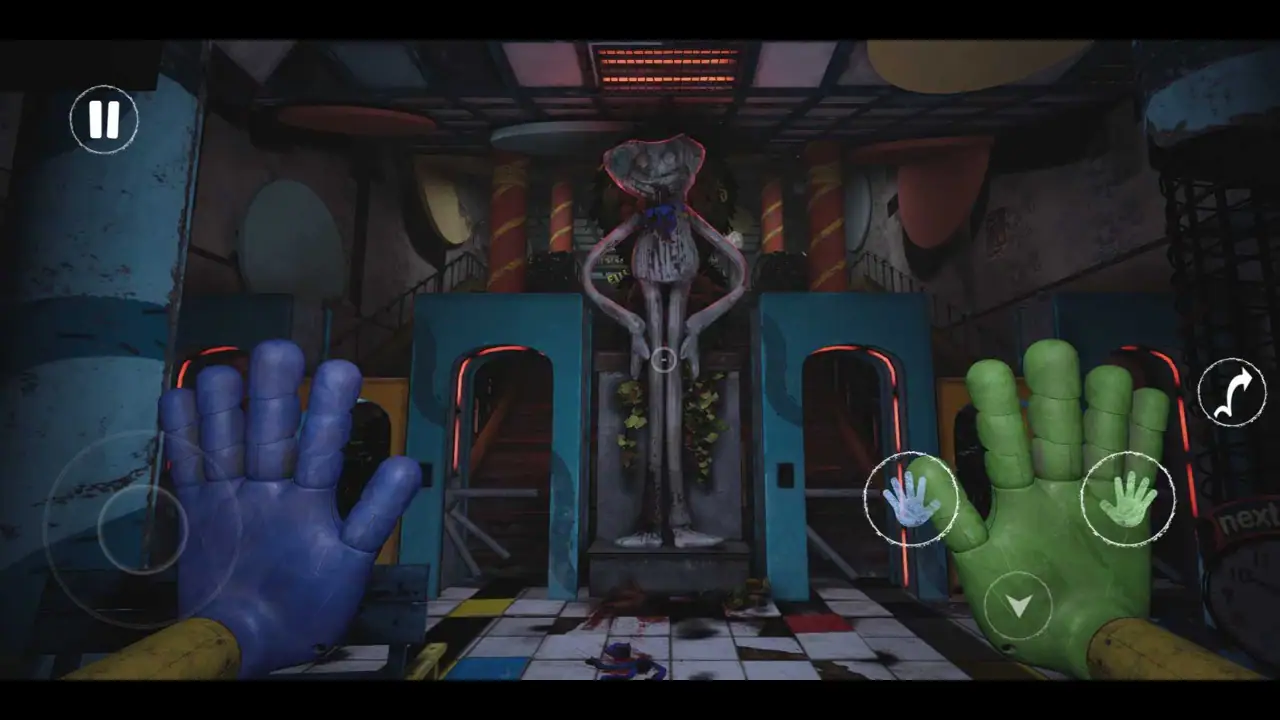
This approach rewards a slower player. If I move from objective to objective without looking around, I can still follow the basic direction, but I lose much of the uneasy storytelling. The best use of my time was to pause at junctions, inspect the space, and ask why a particular room was arranged that way. That habit also helped me notice routes and interactive elements before frustration set in.
There is a trade-off here. Environmental storytelling is satisfying when I am in the mood to observe, but it can feel vague when I want a direct answer. Players who prefer clearly marked goals may find some moments slower than expected. I would choose a more straightforward adventure if I wanted constant movement and explicit instructions.
The world language is especially effective because it keeps returning to the idea of childhood comfort without allowing that comfort to remain harmless. The shapes and colors are not random visual noise. They establish expectations, then make those expectations feel unsafe. That is a more lasting kind of horror than simply filling every room with darkness.
Sound gives the setting its pulse
Audio is central to the way the game controls my attention. Quiet stretches create room for suspicion, while sudden changes in sound make me reconsider what I thought I understood. I often felt that a corridor was threatening before I could explain why, and the sound design was usually responsible for that reaction.
Headphones are the obvious recommendation, but the useful point is not just immersion. They help separate environmental cues from the general noise of a room. When I played with external distractions around me, I was more likely to miss the subtle shift that told me to slow down or look again.
The rhythm is not built around nonstop action. The game alternates observation, exploration, puzzle-solving, and moments of pressure. That variation prevents the atmosphere from becoming flat. If every minute demanded a chase, the colorful setting would lose some of its power. By giving quiet spaces room to breathe, the game makes the more urgent passages feel sharper.
At the same time, this pacing may test the patience of players who expect a horror game to keep escalating. Some sections ask me to remain present rather than constantly react. I appreciated that restraint, although I also had moments when the next step felt slower than the surrounding mood deserved. The game is strongest when its pauses feel deliberate, not when they feel like I am searching without enough direction.
A useful approach is to treat sound as information rather than background decoration. I do not mean that every noise provides a direct solution. Instead, audio often tells me how to feel about the space: secure enough to examine it, exposed enough to move carefully, or rushed enough to stop admiring the scenery. That makes listening part of the play experience even when it is not a formal puzzle mechanic.
How the mechanics support the mood
The gameplay works best when exploration and problem-solving reinforce the atmosphere. I am not simply walking through a horror-themed set; I am using the environment to decide where to go and what deserves attention. That connection makes the setting feel playable rather than staged.
The main weakness is that the mood can make practical navigation harder. When a location is intentionally dim, cluttered, or visually unsettling, it is easy to mistake atmosphere for a missing clue. I learned to make a mental note of familiar landmarks and to revisit nearby rooms before assuming I had reached a dead end. That small habit reduced aimless backtracking.
Another useful tip is to avoid treating every object as equally important. The game presents spaces with enough visual personality that I initially wanted to inspect everything. Over time, I became more selective: I looked for changes in layout, unusual placement, readable prompts, and objects that connected naturally to the current obstacle. This kept exploration from turning into random tapping.
That balance is important on mobile. Touch controls can make precise interaction feel less immediate than playing on a larger platform, particularly when I am under pressure. I found the game more comfortable when I used deliberate movements and gave myself time to line up an interaction. Players who dislike touch-based tension may prefer a different version or a different horror adventure altogether.
The game is not aimed at people looking for deep character customization, open-world freedom, or a large collection of unrelated activities. Its appeal comes from a guided, story-focused journey through a strongly designed place. That focus is a strength when I want a contained horror experience, but it also means there is less reason to keep returning once I have finished the main journey.
Who will enjoy the $4.99 experience
I would recommend it to players who like horror built from atmosphere, environmental questions, and puzzle-led exploration. It is also a good fit for someone who enjoys discovering how a setting tells a story through design rather than relying on long explanations. The Teen rating is worth taking seriously for younger players or anyone sensitive to frightening imagery and sustained tension.
The paid model suits me better than a game interrupted by constant prompts to watch something or spend more during a tense moment. Paying $4.99 means I approach the experience as a complete purchase, and that makes it easier to settle into the mood. I would still suggest checking the device requirement before downloading, since Android 11 is the minimum operating system.
Its audience is already fairly visible in the store response: the game has an average rating of 4.3 from around eight thousand ratings, with more than four hundred written reviews and over one hundred thousand installs. I would not use those figures as a substitute for personal taste, but they do show that the mobile release has found a substantial audience for this style of adventure.
For an everyday scenario, I can imagine playing it after dinner with headphones, a charged phone, and enough time to finish a meaningful section without interruption. That is much better than attempting it during a commute. A crowded bus, bright sunlight, and frequent pauses work against the careful pacing, while a calm room lets the sound and visual details do their job.
I would skip it if I want a cheerful game, a quick session with immediate rewards, or a relaxed puzzle experience. I would also think twice if horror tension makes me uncomfortable, because the uneasy mood is not an occasional extra layered over a harmless adventure. It shapes the way I read almost every room.
How it compares with other mobile adventures
Compared with ordinary mobile adventure games, this one is more committed to mood and suspense than to broad exploration. Many alternatives make their objectives obvious and keep the player moving through bright, low-pressure environments. Here, uncertainty is part of the design, and the setting often matters as much as the next task.
Compared with simple mobile horror titles, it feels more structured. The fear is connected to a recognizable place, recurring visual ideas, and a progression that asks me to understand the environment. That gives the experience more personality than a sequence of unrelated scares. The trade-off is that I cannot expect constant intensity or instant clarity.
Compared with free games in the same general space, the upfront price is the main decision point. If I only want to sample a horror mood for a few minutes, a free alternative may be easier to try. If I want a focused chapter with a consistent artistic direction and no need to build a session around ads, the purchase makes more sense to me.
The developer, Mob Entertainment, clearly understands that the recognizable visual identity is part of the appeal. Still, the game is not carried by its characters or name alone. Its success depends on whether the player accepts the slower rhythm, pays attention to the setting, and tolerates moments where progress requires patience.
Small habits that improve the playthrough
I recommend playing in short but uninterrupted blocks rather than forcing a long session. The game’s tension benefits from a fresh sense of place, and taking a break after a difficult sequence can prevent frustration from turning the next puzzle into guesswork. When I returned with a clear head, I often noticed a route or visual connection I had ignored.
Keep track of where you have already searched. A quick mental map is more useful than repeatedly checking every room. Playcare is designed to make spaces feel similar in mood, so remembering landmarks helps separate genuine progression from circular wandering.
When a puzzle seems unclear, change the question. Instead of asking, “What button have I missed?”, I tried asking, “What is this room teaching me about how it works?” That shift encouraged me to examine the environment’s layout and relationships rather than tapping every visible object.
Finally, let the quiet sections remain quiet. I initially wanted to hurry through them because nothing obvious was happening. That was a mistake. The pauses are where the setting builds its pressure, and rushing makes the later moments less effective. The game rewards attention more than speed.
My atmosphere verdict
After spending time with it, I see Poppy Playtime Chapter 3 as a carefully mood-driven adventure rather than a generic horror game placed inside a children’s setting. Its art direction gives Playcare a memorable visual language, its sound design keeps me alert, and its pacing understands that anticipation can be more powerful than constant action.
The experience is not perfect for every mobile player. Touch interaction can feel less comfortable during stressful moments, environmental clues may require patience, and the focused structure will not satisfy anyone searching for an endlessly replayable game. Those limitations are real, but they also come from the same design choices that make the game distinctive.
My recommendation is straightforward: choose it if you want to explore a disturbing, story-led setting at your own pace and are willing to listen, observe, and occasionally backtrack. Skip it if you need fast sessions, bright comfort, or unambiguous directions. For me, the strongest achievement is how consistently the visuals, sound, and mechanics point toward the same feeling. Playcare does not just look unsettling; it makes the act of moving through it feel uncertain.
My final take: this is a good choice for a patient horror-adventure player who values atmosphere as much as action. The $4.99 price is easiest to justify when I treat the game as a focused evening experience, with headphones on and enough time to notice the details. It left me with the impression of a place that had been designed to welcome me, then quietly taught me not to trust that welcome.
FAQs for Poppy Playtime Chapter 3
What is Poppy Playtime Chapter 3 about?
Poppy Playtime Chapter 3 continues the horror-adventure story inside the abandoned Playcare orphanage, located beneath the Playtime Co. factory. You explore disturbing rooms, solve environmental puzzles, uncover more background information, and face new threats. The chapter focuses heavily on atmosphere, exploration, and story progression, so it is best suited to players who enjoy suspenseful gameplay rather than constant action.
Is Poppy Playtime Chapter 3 suitable for children?
Although the game may attract younger players because of its colorful toy-themed setting, Poppy Playtime Chapter 3 contains frightening scenes, disturbing imagery, horror themes, threatening creatures, and moments designed to create tension. Parents should review the official age rating and consider their child’s sensitivity to jump scares and dark subject matter before allowing access. It is generally more appropriate for mature players.
What devices can run Poppy Playtime Chapter 3?
Poppy Playtime Chapter 3 is available on selected platforms, including compatible Android and iOS devices, as well as other gaming systems and computers depending on the official release. Mobile performance can vary considerably, so you should check the store listing for supported operating-system versions, available storage, and device requirements. A newer phone or tablet usually provides smoother graphics and more reliable loading.
Does Poppy Playtime Chapter 3 require an internet connection?
The main gameplay experience is primarily designed as a single-player adventure, and an internet connection may not be needed continuously after the game has been installed. However, internet access can be required for downloading the application, verifying purchases, receiving updates, or restoring content. Requirements may differ between Android and iOS, so checking the official store information before traveling or playing offline is recommended.
Is Poppy Playtime Chapter 3 free to download?
The price and purchase structure for Poppy Playtime Chapter 3 can vary according to the platform, region, and store listing. Some versions may require an upfront purchase, while other releases or related content can use a different payment model. Before downloading, review the official listing carefully for the full price, in-app purchases, advertisements, and included content so you understand exactly what the installation provides.
Pros
- Atmospheric environments make exploration feel tense and memorable.
- Puzzle variety keeps progression from relying only on chase sequences.
- New mechanics add more depth to familiar GrabPack interactions.
- Environmental storytelling rewards players who inspect rooms carefully.
- Sound design effectively builds suspense during quiet exploration.]
Cons
- Some puzzles provide limited guidance and may feel unclear at times.
- Loading screens can interrupt the flow between major areas.
- Certain chase sections rely more on memorization than strategy.
- The dark visuals may make important interactive objects hard to spot.
- The chapter’s story leaves several questions unresolved for future episodes.


